
Oxide ceramics are among the most widely used technical ceramics. They combine high hardness and wear resistance with good electrical insulation properties and high chemical resistance across many fields of application.
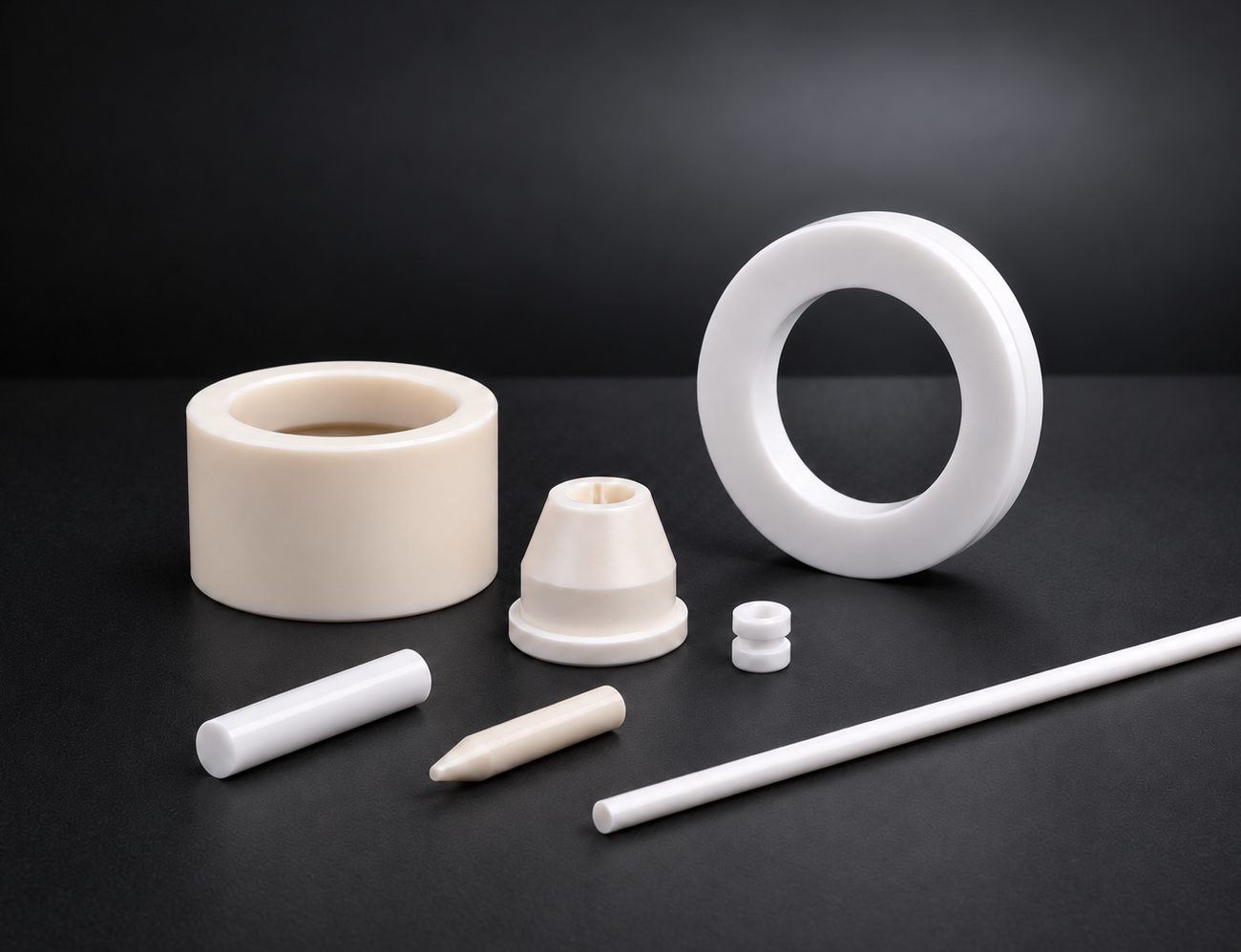
However, the term oxide ceramics does not refer to a single material. Aluminium oxide, zirconium oxide and various composite ceramics differ significantly in their properties. In addition, purity, microstructure, additives and the manufacturing process all influence how the finished component behaves. That is why the right material grade has to be selected for each application.
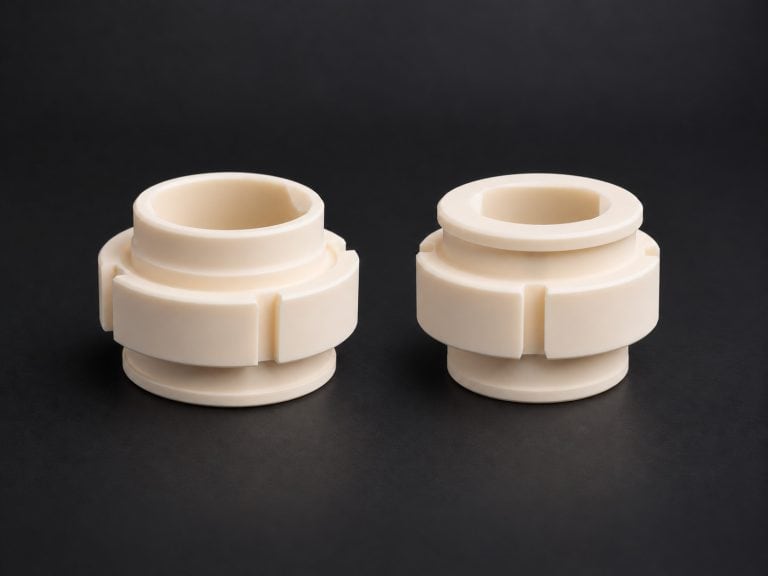
Two factors are particularly decisive for the performance of an oxide ceramic:
Oxide ceramics are not ductile and therefore cannot absorb plastic deformation the way a metal can. Components must be designed with ceramics in mind. Suitable radii, uniform wall thicknesses and clearly defined load introduction reduce stress peaks and improve reliability.
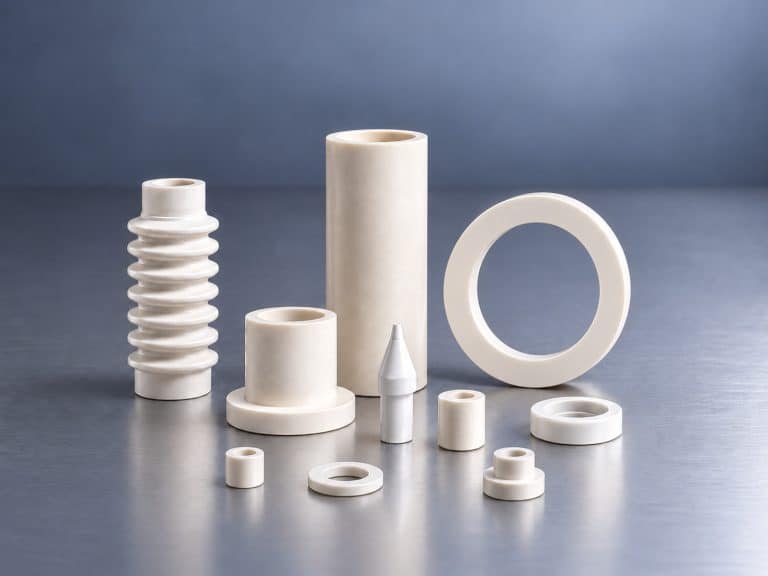
The most important oxide ceramic materials include:
Aluminium oxide (Al₂O₃)
Aluminium oxide is a versatile standard material for electrical insulation, wear protection and high-temperature applications. Al₂O₃ is highly resistant in numerous chemical environments. Where no special additional properties are required, aluminium oxide is often the most economical solution.
Zirconium oxide (ZrO₂)
Zirconium oxide combines high wear resistance and precision with a fracture toughness that is high for a ceramic. This makes it particularly suitable for components where robustness, edge stability or loaded functional surfaces play an important role.
Composite ceramics and special grades
Materials such as ZTA and ATZ combine properties of aluminium oxide and zirconium oxide. They are an option when a standard grade does not fully meet the requirements for wear, fracture behaviour, precision or long-term stability.
The material name therefore only provides initial guidance. What matters is the specific grade, which must be matched to the respective application.
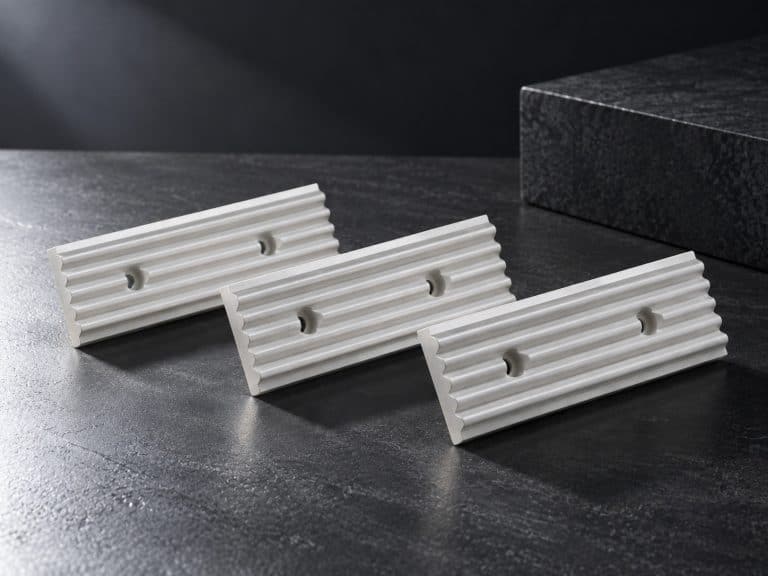
Oxide ceramics are used above all where electrical insulation, precision and long service life come together.
Electronics and electrical engineering
Typical applications include insulators, feedthroughs, carriers and precision components that are exposed to electrical and thermal loads at the same time.
Medical technology
Depending on the application, oxide ceramic materials are used for components that require wear resistance, long-term stability, cleanability or defined surfaces. Besides the base material, the specific material grade and the surface finish are decisive here.
Mechanical and plant engineering
Applications include guide and wear parts, nozzles, flow elements, contact surfaces, and fitted and precision components. Ceramics are used here when metal components increasingly lose their geometry and function due to friction, temperature or media.
At very high temperatures, under severe temperature changes or with special tribological requirements, a non-oxide ceramic may be the better solution. For many industrial tasks, however, oxide ceramics offer a technically proven and economical starting point.
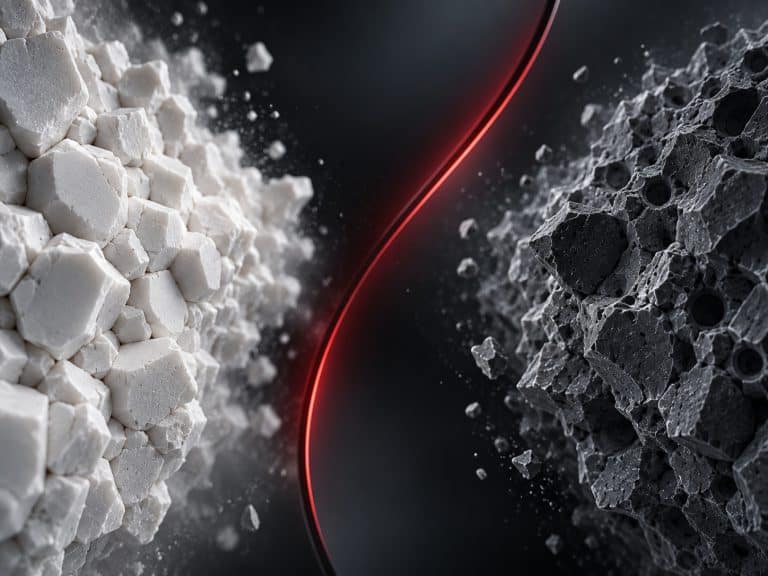
Oxide ceramics are often the right choice when:
Non-oxide ceramics such as silicon carbide and silicon nitride are often used when:
The choice should always be based on the actual operating conditions. Temperature, medium, load, mating partner and electrical requirements must be considered together.
For an initial material assessment, we need:
On this basis, we check whether oxide ceramics are suitable and which material grade best meets the requirements.