
Ceramic components are typically used when conventional materials cannot permanently meet a specific technical requirement. Typical reasons include high wear, extreme temperature loads, aggressive media, or particularly stringent dimensional accuracy requirements.

We manufacture ceramic components according to customer specifications, taking later series production into account from the very beginning. The process is typically based on a 3D model. We assess feasibility, material-appropriate design, required tolerances, and the appropriate manufacturing process.
Ceramics do not always have to completely replace a metal component. Often, a combination of metal and ceramics is more technically robust and cost-effective. The key is to use the ceramic material where its properties are actually needed.

Our components are used wherever friction, abrasion, heat, chemical exposure, or electrical requirements are present—often in combination.
Technical ceramics are particularly suitable for:
The term “technical ceramics” encompasses a wide variety of materials and grades. Therefore, it is not only the material group that is decisive, but also the specific composition and quality.
The following examples illustrate the requirements that ceramic components can meet in practice.
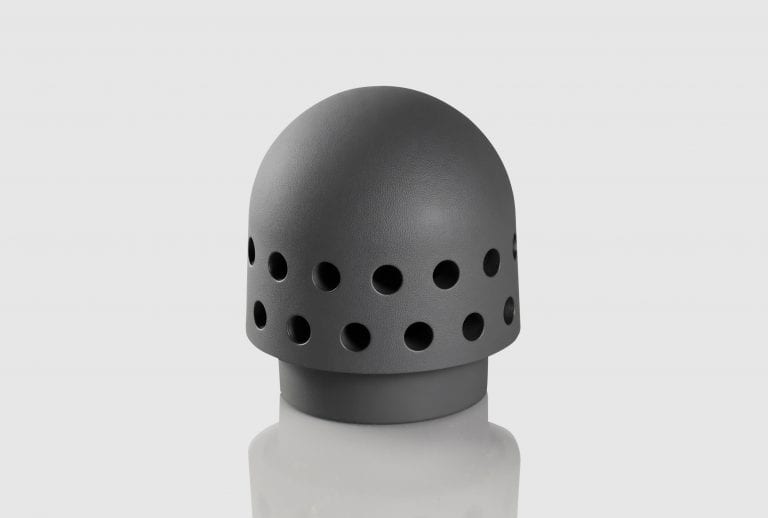
Primary air pins are simultaneously exposed to high temperatures, airflow, and particles. Ceramic versions remain dimensionally stable and wear-resistant. As a result, they retain their geometry even under conditions in which metallic surfaces may change or wear out.

In the semiconductor and process industries, wafer carriers must meet high standards for flatness, dimensional accuracy, and surface quality. These properties can be maintained over the long term even after repeated temperature cycles.
For lapping plates with diameters up to 500 millimeters, we consistently achieve flatness and parallelism of approximately 2 micrometers.

Ceramic insulators are used when reliable electrical isolation must be combined with resistance to temperature, media, or mechanical stress. The specific temperature profile, the medium, the electrical voltage, and the component geometry are decisive factors in the selection of materials.
A large portion of our projects involves custom components that do not fit into any standard category. We also develop and manufacture suitable solutions for such applications.

Even during the development phase, we consider how a component can later be manufactured cost-effectively in series production. To this end, we examine the geometry, the required precision, and the appropriate forming process. Unnecessarily complex geometries or overly tight tolerances can significantly increase production costs.
Depending on the component, various methods are available for prototypes and functional models:
For larger production runs, ceramic injection molding (CIM), for example, can then be used. In this process, the design and tolerance specifications are tailored to minimize the need for costly machining and ensure that the process remains consistently stable.
Discover more applications
The more precisely the actual requirements are described, the faster we can propose a technically suitable and economically viable solution. For a quick technical and commercial review, we need: