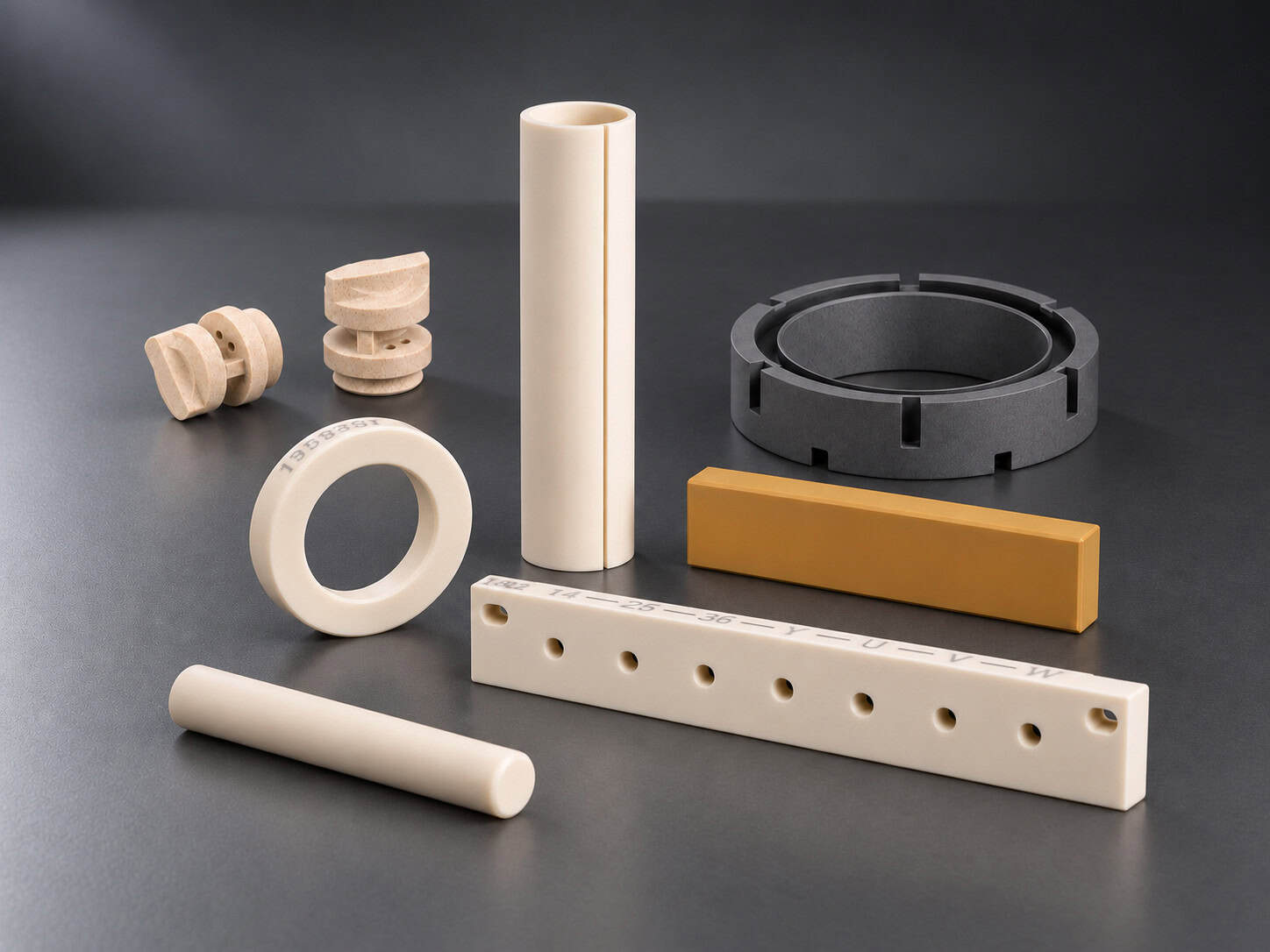
An insulator must meet different requirements than a plain bearing or a nozzle. Which ceramic is suitable depends on the operating conditions. The three material groups provide an initial overview: oxide ceramics, non-oxide ceramics and silicate ceramics.
Oxide Ceramics: qualitative rating per property from 0 (low) to 8 (high)
Property
Lower rating
Upper rating
Electrical Insulation
4
8
Mechanical Strength
1
8
Hardness
1
7
Temperature Resistance
1
8
Thermal Conductivity
1
8
Cost Efficiency
3
7
Non-Oxide Ceramics
Non-Oxide Ceramics: qualitative rating per property from 0 (low) to 8 (high)
Property
Lower rating
Upper rating
Electrical Insulation
0
8
Mechanical Strength
1
7
Hardness
1
8
Temperature Resistance
2
8
Thermal Conductivity
2
7
Cost Efficiency
1
5
Silicate Ceramics
Silicate Ceramics: qualitative rating per property from 0 (low) to 8 (high)
Property
Lower rating
Upper rating
Electrical Insulation
4
8
Mechanical Strength
1
4
Hardness
2
4
Temperature Resistance
3
6
Thermal Conductivity
1
3
Cost Efficiency
6
8
Range
Lower rating
Upper rating
The Three Material Groups at a Glance
Oxide Ceramics
Oxide ceramics consist mainly of metal oxides, including aluminium oxide and zirconium oxide. Aluminium oxide is widely used for electrical insulation and wear protection. Zirconium oxide offers high fracture toughness for a ceramic and is particularly suited to mechanically stressed precision components. Typical applications include insulators, guides and measuring probes.
This group includes silicon carbide and silicon nitride, among others. Silicon carbide is particularly hard, resists abrasive wear and conducts heat well. Silicon nitride withstands rapid temperature changes and alternating mechanical loads. Both are used, for example, in bearings, seals and components for thermal processes.
Classic silicate ceramics such as steatite and cordierite have proven themselves in electrical and thermal engineering for decades. Steatite is especially suited to electrical insulation components. Cordierite expands only slightly when heated and therefore copes well with temperature changes. For many insulators, holders and carriers, these materials are an economical choice.
Together with you, we determine which material meets the requirements and can be manufactured economically in the quantity you need. Simply send us your drawing or 3D model along with a short description of the operating conditions.